Showing posts with label History. Show all posts

Saturday, August 22, 2009

On Hannibal Barca...

What seems like a life time ago, I began reading about Hannibal Barca, a fascinating figure in world history. My interest became an obsession and I like to think that I am a mini-expert on the subject, though of course I am far from it. During my time researching about the man, I had frequented a site by one Dr Hilary Gowen, a site which sadly disappeared without a trace a few years later. Through some ingenuity and lots of hard work, I was eventually able to reconstruct her site to the best of my abilities, to allow other people access to this amazing part of history.

The fruit of my labour became Carthagelives.com a site that has been running for a few years now and in which you can read all you need. It is simple yet functional and I do hope you enjoy it. Within this site is information about Ancient Carthage, the Punic Wars and of course Hannibal Barca.

.

Wednesday, May 13, 2009

Our debt to the Barbarossa brothers...


Strange flag isn't it? The writing on the top states: Victory is from Allah and imminent conquest, announce this to the believers (نصرٌ من الله و فتحٌ قريبٌ و بشر المؤمنين) in each of the four crescents are the names of Islam's righteous caliphs: Abu Bakr, Umar, Uthman and Ali. But what is that on the bottom? The Star of David? No, it is the Seal of Solomon and a popular symbol in Islamic art throughout medieval times. This flag is the flag of Hayreddin Barbarossa, an amazing man who lived in the period which followed the fall of the last Muslim kingdom in Spain. He was an Ottoman admiral charged with raiding the shipping of the European kingdoms and protecting the shipping routes of the Ottoman empire. Thanks to his efforts the entire Mediterranean sea was an Ottoman pond. His elder brother was named Oruc and his heroic efforts at rescuing almost 70,000 Mudejar's from Spain gained him the affectionate name of Baba Aruj (Baba Oruc), this name was inherited by Hayreddin following Oruc's death whilst fighting the Spanish in Algiers. What struck me is that these men lived at a time when the Muslim world shared a very different power dynamic with the European countries than it does today. The contrast could not be more startling, with Hayreddin's men once threatening Rome with the sack, and today, almost 460 years later, where we have the Roman Pope now in Jerusalem, itself now occupied by Zionists since 1948, having the nerve to lecture the Palestinian people about how to accept occupation. We are not talking about a very long time here. The Ottoman state was decapitated by Mustafa Kemal in 1922, a mere 376 years after the death of Barbarossa in Istanbul. This is a reminder if any that it is men with belief who make nations what they are and not intellectually subservient puppets. Were it not for the Barbarossa brothers, tens of thousands of Mudejar's would have been slaughtered in Christian Spain and the entire Maghreb would be Spanish or Italian (rather than just speaking the language of the French).

How we need more men like Hayreddin today...Read more about this remarkable man here.

.

Monday, February 02, 2009

Hama: the whisper of a memory


An entire city was almost exterminated on a day like this, twenty seven years ago...while the Arab world looks over with astonishment and anger at the death and destruction which has struck Gaza, the people of another city will today be reflecting on a similar calamity that befell them but was many times greater. It is estimated by the Syrian Human Rights Commission that almost 40,000 of the people of Hama were killed during the crushing of the Muslim Brotherhood's uprising. Large swathes of the historic part of the city were completely obliterated, including mosques and churches. We have read reports by Patrick Seale, Robert Fisk and Thomas Friedman (of all people), but the human element has always been missing. Over the years I have spoken to many about what happened there and how the massacre affected them. Here are some first hand accounts from ordinary people who were there at the time - though I have changed their names to keep them anonymous:
.
Zayd: I was a little boy at the time, raised by my grandmother. One morning we heard the call to prayer but it was not prayer time. There was a call from all the mosques, Hayy 3ala al Jihad (Arise to Jihad) over and over, along with Allahu Akbar. The city came under attack and shelling. I don't remember how long we stayed hidden in our home. We had no food or water, only hearing gunfire. I remember hearing machine gun fire, grenades going off. I heard that mingled with cries of Allahu Akbar (God is Great!). When these stopped, we'd know that another young man or group of men had been killed whilst fighting the soldiers. Eventually, this grew less and less common as they were gradually wiped out. Some soldiers also turned on their comrades, unable to to take part in the massacre. They too were cut down in gunfights. When we first left the house to look for food or water, I saw body parts strewn everywhere. I could see hands and feet and heads on the road as clearly as I see this cup of coffee in front of me now...If the regime ever fell, there will be a bloodbath in Hama as scores are settled with those who betrayed their neighbours and collaborated with the government.
.
Wa'el: I was a little boy, we knew the shelling started but then I heard that my uncle had come to rescue us. He was an officer in a special army unit, he had been wounded twice before in his career and fought the Israelis in Lebanon. He had also been captured by them and wounded but his friends came and broke him free from the clutches of the Israelis, his best friend carried him on his shoulder as they escaped under heavy gunfire. Anyway, my uncle commandeered an armoured troop carrier, drove right up to our home, took our family in and then drove us out through the front lines. He waved his machine gun at a bus driving past Hama and ordered the driver to take us to Damascus, warning him not to stop or betray them. Later I heard that my uncle had been reported as a Brotherhood sympathiser by some of his rival officers who wanted to see him executed in a field court. They said he smuggled out Muslim Brotherhood fighters, which was not true, it was just us he got out. Luckily he had contacts high up in Damascus who could vouch that he was not with the Brotherhood and he was not shot. My grandmother was not so lucky, she was killed by gunfire before he could reach us.
.
Zeyad: I never met my father, my mother was still pregnant with me when the uprising began. I heard that my father was out of the house, probably looking for food or water and he was held by an army patrol. They lined him and several other men up against a wall and machine gunned them. Just like that. I was raised by the rest of our family in Damascus.
.
Malek: We are not from Hama, we heard whispers of what was happening at the time in Damascus. I also heard that the soldiers were selling household goods and furniture under the President's bridge in Damascus for outrageously low prices. I went to my father and told him about this, saying we could get a fridge or a washing machine for a bargain. My father refused, he said this is all Mal haram (Money which is haram). "These things have been looted from Hama during the massacre.", he told me. We didn't buy anything from there and I didn't go near the area whilst the things were being sold there, al hamdulilah (Thank God).
.

Sunday, October 26, 2008

Aramco World Magazine do sometimes have some great articles about Arab history. Here is one on Muslim Sicily.

.

Monday, July 28, 2008

"So who is right? It's a confusing picture. But Marie-Pierre Manet-Beauzac, "the last Cagot in the world", has no doubts where she comes from: "I believe the Cagots are descendants of Moorish soldiers left over from the 8th century Muslim invasion of Spain and France. That's why some people called them 'Saracens'. I am quite dark, and my daughter Sylvia is the darkest in her class." "

.

Monday, February 04, 2008

1492

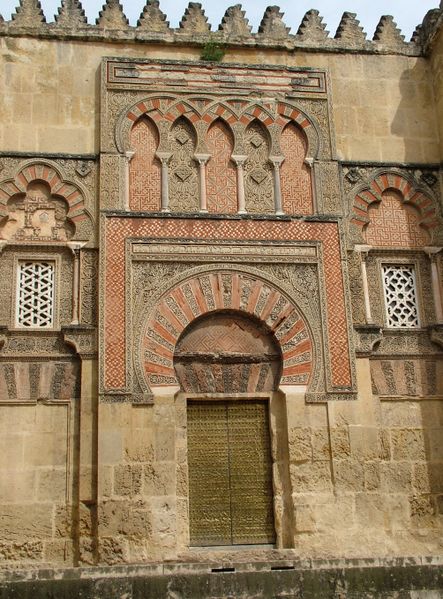
I'm an avid reader of history and one of my favourite periods has to be that of the Islamic presence in the Andalus. Today I felt inclined to read up a bit about the story of Abd el Rahman the First, the founder of the Ummayad dynasty which ruled in the Iberian peninsula for another three hundred years (many Syrians were in the Andalus by then). Whilst reading an entry about him on Wikipedia, I noticed that it is said he is buried under the Mezquita, now a church, in Cordoba. A morbid fascination overtook me, what happened to the cemetaries for all those Muslim Andalusians who had lived there for over eight hundred years? I began searching for information about the normal people who lived in that era, where were they buried? What trace did they leave behind? What was life like for them? I even wonder what the Andalusian accent would have sounded like, since each part of the Arab world developed it's own distinctive accent by then and I'm sure they would have been no different. My search brought up something very interesting. Google allow you to preview books and amongst the search results, I came across "Muslims in Spain, 1500 to 1614" by Leonard Patrick Harvey. It wasn't quite what I was after, but it opened my eyes to something I had only noticed fleetingly before. The plight of Muslims in Spain after the fall of Granada in 1492.

1492 is often taken to be the fall of Granada and also the year that the "New World" was discovered. In my opinion, it is a massive watershed, marking the increasing power of a well armed and expansionary Europe and the decline in power of the East. However, I've always tended to think that the expulsion of the "Moors" and Jews of Spain took place in 1492 and that was the end of it. Far from it. What Harvey's book tells us is that in spite of the forced conversion of the Moors or "moriscos" many retained their customs for a very long time and in fact there were three key periods of armed rebellions. The Ottomans were providing logistical and material support from Algiers and the local Muslim community leaders in Granada and other areas were in regular contact with Algiers and Morroco. The period after the fall of Granda was one marked by intense bloodshed, violence and genocide as Spains Islamic identity was steadily purged. During this time, leaders of the various rebel groups sported names such as Ben Humeya (also known as Fernando de Valor), El Zaguer (al saghir or small one), Diego al Guazir, Bernardino Abu Amer and Gonzalo al Seniz. Ben Humeya (Bin Ummaya) claimed to be the final descendant of the Ummayads and led a rebellion against the Spanish crown from the mountains, eventually being strangled in a power struggle and chucked to the bottom of a ravine (somethings never change!). It's almost amusing to read such Spanish/Arabic names which I had never heard of nor thought possible. Yet is it really so difficult to imagine? So many Arabs also moved to Latin America in the late 19th and 20th century and today form a vibrant and wealthy part of the countries they inhabit that retains it's Arab identity. In many ways, these men whose grandparents would have called themselves Andalusian and lived in Granada, were precursors to this merging of cultures and identities, yet who even 4 decades after the exile of King Boabdil, retained enough of their identity and culture to rebel.

From what I can tell, Harvey's book describes the details of what was happening to those Muslims who chose to remain in Spain and the tensions and power struggles which occurred between the community and also with the Spanish conquerors. I find it fascinating that it ties in the rest of the Islamic world at the time and how the Ottomans were inciting rebellion and supporting the Moriscos, until the rise of the Safavids in Iran forced them to turn their attention eastwards. It brings to life the Andalus and connects it with later events, not just as a place that was lost in the depths of history. In Morroco there are still families which keep as family heirlooms the keys to their long lost homes in Granada and Cordoba. As in Sicily, Malta and elsewhere, the Western Mediteranean was a vibrant yet volatile exchange between Europe and the Islamic world, with ideas and people flowing back and forth, rather than a static boundary where the differences are clearly demarcated. His book is definitely on my ever increasing to-read list and should prove a fascinating insight into what many of us think is a long vanished world, but which remains alive within ourselves and cultures.

I try to imagine what living in 1614 would have been like. Did the Muslims still living in Spain and North Africa remember al Andalus like Palestinians remember their home cities? Did the people who lived in al Maghreb imagine the horrors which awaited them only a short time later and the arrival of the first Spanish and French soldiers? Can we even imagine a Morocco or Algeria where it is alien for someone to speak French? Many families in Damascus are descended from those early refugees escaping French and Spanish slaughters and of course who can forget Abd al Qader al Jaza'iri who until recently was buried in Damascus and who played an instrumental role in protecting the Christians of Damascus from slaughter from rampaging mobs? Did the people of Damascus complain of the increase in prices and hardships brought about by that early influx of refugees? At the time, Muslim refugees from Eastern Europe were also settling in the area of Damascus called the Muhajreen.

Some may argue that history is boring or irrelevant, yet I counter by saying that those who ignore history are destined to repeat it. Yet reading history is not without its dangers, those who read history can sometimes fall in love with it to the point that they resent the present and wish to reside only in the past. It is truly a fine line that we must tread.

.

Monday, May 14, 2007

Salute to Abbas Ibn Firnas

OK, I have to admit I enjoy reading the articles from the Saudi Aramco World magazine. They tell me things I would never have imagined about Arab and Islamic history and are well written, eloquent and interesting. Today I was reading through one article in particular about an old Turkish gentleman in Germany who has opened a museum of Islamic medieval science. It was quite interesting, but my eye caught the name of 'Abbas Ibn Firnas who was credited with the first scientific attempt at flight in recorded history. Now, I had always thought it was the Wright brothers who invented the plane but it seems that when it comes to unpowered flight, Ibn Firnas came first.

I found more about this man who, at the age of 65 decided to fly his glider off of a mountain in al-Andalus, present day Spain, the year was 875CE. The flight was actually quite successful but his landing was terrible, he had hurt his back severely and was unable to attempt this again. Amazingly, Wikipedia also had an entry for him and I was flabbergasted to discover that there is even a crater named after him on the Moon! On another note, the worlds first example of a parachute was tested in 852 by Armen Firman, who had the bright idea of jumping off of a high tower in Cordoba, also in Andalusia.

It is a shame that in the entire Arab world, there isn't a single place where scientists and men of knowledge can pursue their passion without being forced to take on other jobs to make ends meet, get arrested, or eventually get forced abroad. Shame, shame shame! Regardless, my quest of delving deeper into Arab and Islamic history continues.

.

Monday, March 26, 2007

Damascus trivia

Did you know why Burj al Roos (Tower of heads), Hay al Krad (Kurdish neighbourhood) and al Muhajreen (the migrants) are called so?

Well apparently, Burj al Roos got it's name after the infamous Timurlang sacked Damascus in 1400. All artisans were sent to Samarkand while the rest of the inhabitants were put to the sword. The area of Burj al Roos is where all their heads were piled into a tower.

Hay al Krad is called thus for being where the Kurdish soldiers of the Mamelukes were kept in barracks, while the name al Muhajreen was given to the area settled by refugees from Eastern Europe. These had been escaping ethnic cleansing by the advancing Christian Europeans who had begun pushing back the Ottoman empire.

If anybody knows any other tid-bits of information please feel free to share or at least correct me if I've said absolute rubbish!

.

Saturday, March 10, 2007


"The Farewell of King Boabdil at Granada" by Alfred Dehodencq (French Orientalist painter 1822-1882)

.

"The other 1492" from Saudi Aramco World

"Al-Andalus is remembered on another level as the one area that was once - but is no longer - part of the Muslim world. Until the middle of this cen­tury, Muslims have withstood Mongols, Crusaders, empire-builders and settlers and still emerged with their Islamic identity intact - except in Spain. Even the Communist regimes of present-day China and the former Soviet Union failed to root out Islam, failed to deracinate their Muslim populations, despite vast expenditures of time, of treasure and of blood in attempts to build "the new socialist man" (See Aramco World, January-February 1990). The fact that the rest of the Muslim world has retained its religious identity over some fourteen centuries rife with political, social, cultural and technological change makes the exception of Spain that much more painful to Muslims."

I know it's from Saudi Aramco, but they do write some interesting articles sometimes!

.

Thursday, August 24, 2006

The Lessons of History


I managed to dig up this interesting article about an Egyptian tourist's travels through Spain. I have never read an account about Andalusia that was not laced with lament and sorrow at the loss of such a jewel. That makes me wonder how I will feel should I ever decide to visit the Alhambra, Cordoba and other such sites. The pictures are breathtaking and any history buff would recognise that feel of pining to see what it would have been like in it's heyday.

What the Arabs of today should recognise, is that the people who lived in the Andalus and made it what it was are long dead, their bones ground to dust. They were different people and thought differently, and any arrogant claim of some lineage that has come down through the ages is misguided. What we can do however, is learn from them. Their splintering into "Tawa'if" and constant infighting had made them easy prey for invasion and subsequently, ethnic cleansing. History tells us that the rest of the Arab world, apart from Palestine, has managed to largely avoid that fate, yet still, the trademark bickering and conspiring of our present governments remains hardly different to the chieftains who ran the Tawa'if over 1000 years ago. Should we the Arabs still lament the Andalus? Perhaps, but one thing is for certain, we must continue to take heed of the lessons those Andalusians left us so long ago. They may be long gone, but those who replaced them in many ways are still with us, and continue to see the Arab world and culture as a rival to be eliminated or assimilated.

.

Friday, August 04, 2006

Europe's Arab heritage

Now that is something you wouldn't hear everyday. Indeed one would think that Europe and the Arab world lie at complete ends of a cultural, social, religious and philosophical spectrum. That may be true for some people, but reality is always a fuzzy interconnection of ideas and culture going back and forth. Culture always flows both ways, note how the Jordanians had taken an immense liking to Scottish bagpipes and used it to produce a hauntingly Bedouin style which I and many others like myself have always admired. Historically, the key points where this flowing occurred were in the parts of Europe that were at varying times Arab up till about 500 years ago, most notably Sicily, Malta and obviously Spain.

In particular, the case of Malta surprised me immensely. Here was an island which to all extents and purposes had been in the European fold for over a thousand years, yet it's inhabitants used a language that was directly Arab in origin. It's inhabitants have a saying "Tkellem bil-malti jekk tridni nifhmek" (Speak in Malti if you want us to understand you.) A phrase that one finds to be entirely Arabic, except for the word jekk, the origin of which I'm unsure of.

Interestingly when I read the phrases they reminded me more of the North African dialect than the Middle Eastern one. I'd read somewhere else that as early as 300 years ago there were still edicts and laws passed in Spain banning the use of Arabic and the practice of Islam amongst the peasantry. Even in our present day, I meet Spaniards who use words of an Arabic origin in everyday expressions, particularly near the south of the country. When I speak to many non-Arabic speakers, it is difficult to convey the rich variety of words and meanings that a speaker can convey in this language and I guess that is partly why it has had such a tenacious connection to those places in Europe. Places where the Arab world and the culture it produced had long since ebbed away.

.